Silver Bengal Cat: Facts & Kittens | Minnesota Breeder
Bengal cats & kittens that will be your “Perfect Pet PurrEver”

Silver Bengal Cats

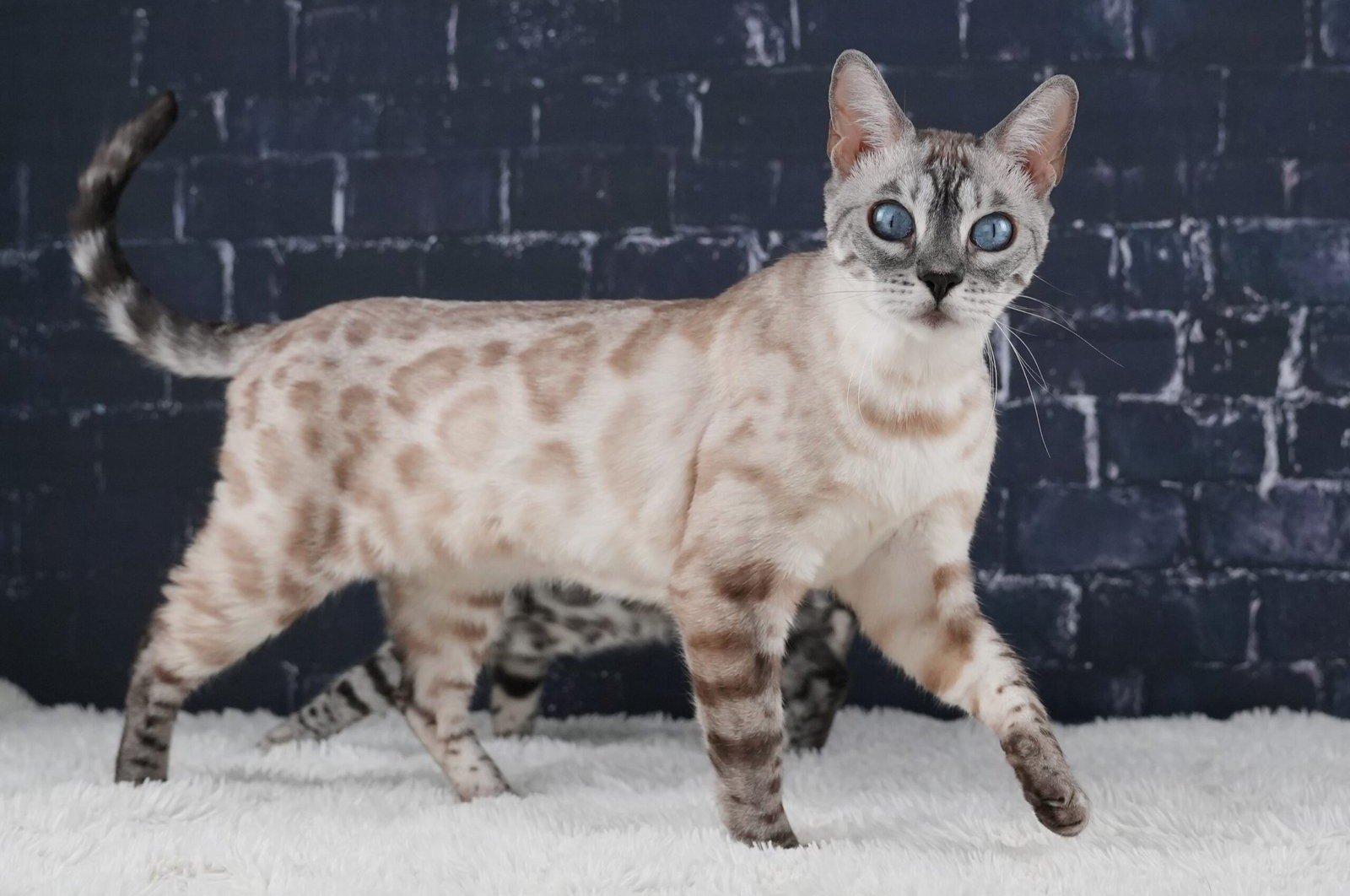
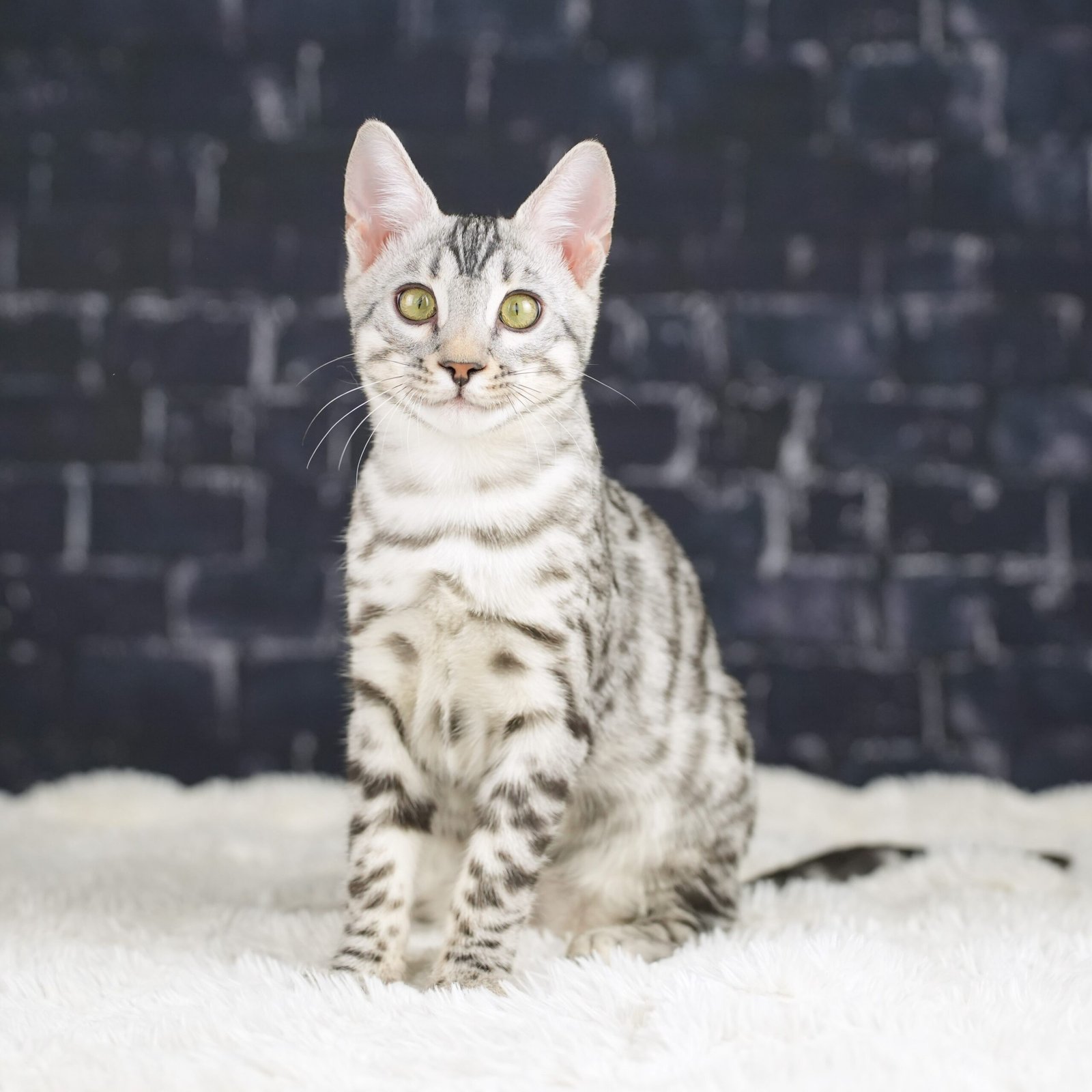
Silver Bengals are striking — a sleek, shimmering coat with a silvery-white background and bold black or dark gray markings that seem to glow from within. That silver effect isn’t a true color but the result of color suppression, which means it can combine with other coat patterns and colors. On brown Bengals it produces the classic silver look; on reds, a softer cameo; on melanistic Bengals, a smoky depth; and on snows, a sharp icy-silver.

Silver Bengal Cat Photos

Silver
Charcoal Silver Seal Lynx
Silver Seal Sepia
Smoke (not recognized by TICA as of 2024)
Silver Blue (not recognized by TICA as of 2024)
Cameo (not recognized by TICA or CFA as of 2024)

The Ghost of the Mountains: The Silver Bengal Story

The First Silver

In 1987, Judy Sugden of Eeyaa Cattery looked at the golden-brown Bengals of the era and saw a missing piece of the wild: the Snow Leopard. To capture that “Ghost of the Mountains” look, she performed a outcross, breeding a brown Bengal to a Silver American Shorthair. This introduced the Inhibitor gene, a genetic “bleach” that stripped away the warm yellow tones of the coat. The result was Eeyaa Silver Salt, born in 1987 — the first recorded Silver Bengal and the icy-white canvas for the entire lineage.

The Bridge and the Pillar

A single outcross is just a start; the true challenge was keeping the color while restoring the wild Bengal look. In 1988, Salt’s daughter Eeyaa Silver Moon became the essential bridge. She carried the silver gene forward while being bred back to high-quality Bengals to refine the breed’s athletic type. Her son, Eeyaa Sterling Silver, born in 1990, became the Pillar. As the premier silver stud of the early 1990s, Sterling was used extensively to establish the global silver population, ensuring the color became a permanent fixture in the Bengal gene pool.

Seventeen Years in the Shadows

Recognition did not come easily. Even when the “Mother of Bengals,” Jean Mill, signaled the color’s legitimacy by adding Millwood Pecan Valley Elsia (1988) and Millwood Sin Badd (1989) to her world-famous program, the registries remained hesitant. For 17 years, Silver Bengals were relegated to experimental status, barred from championship titles. The tide finally turned in May 2004, when TICA officially granted them Championship status. The more conservative CFA followed suit in 2018, validating 30 years of selective breeding.

What Salt Started

Today, the Silver Bengal has moved from outsider to dominant force in the show ring. During the 2023–2024 season, Stratokatzter Highway Star was named TICA Northwest’s Best Silver Championship Bengal. In 2024, BoydsBengals Silver Bullet became the first Silver Charcoal to earn a CFA National Award. Now in the 2025–2026 season, BoydsBengals Silver Storm of Jedha is campaigning to become the first standard Silver Bengal in history to claim a CFA National Win. What began with Salt is now a crowning achievement of the cat fancy.

Nearly four decades have passed since Eeyaa Silver Salt was born, and the line she started shows no sign of slowing. The registries that once barred Silver Bengals from competition now watch them win national titles. What began as one breeder’s vision of a snow leopard in Bengal form has become exactly that — a ghost of the mountains, walking into show halls around the world.

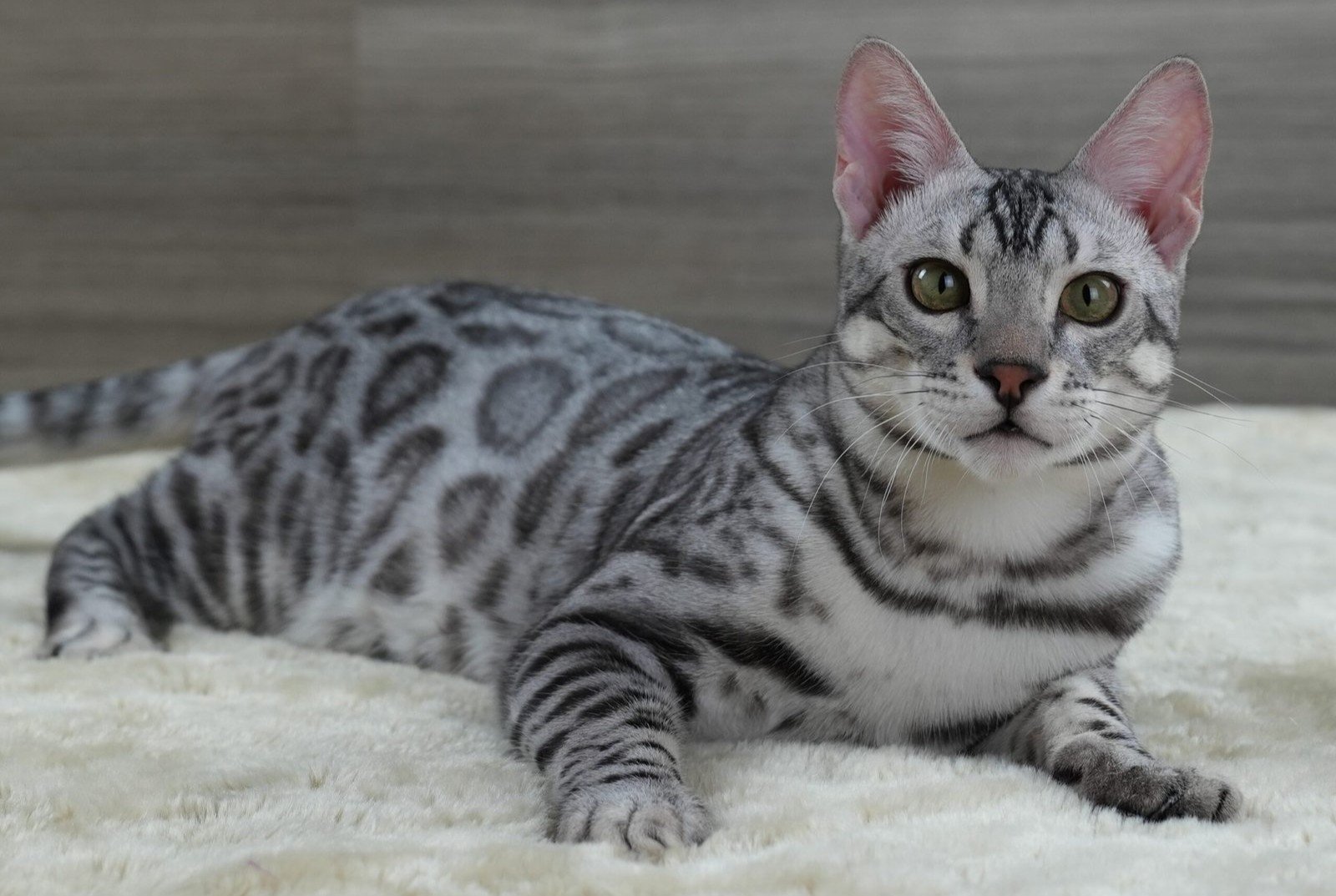
Silver Bengal Cat Genetics:

The silver effect in Bengal cats is controlled by the Inhibitor gene, which has two alleles: the recessive non-inhibitor (i) and the dominant Inhibitor (I). Cats with at least one copy of (I) express the silver phenotype — the allele acts as a molecular switch that affects the two types of melanin differently. It almost completely suppresses pheomelanin, the pigment responsible for warm yellow and red tones, while leaving eumelanin, the pigment behind black and dark markings, largely intact. Critically, this suppression begins at the base of the hair shaft, which is why even melanistic Bengals who have no pheomelanin at all are affected. Their seemingly solid black coat reveals a shimmering silver undercoat, producing the smoke appearance

In 2023, a significant breakthrough made identifying this gene far more precise. Researchers at the University of Missouri’s Feline Genetics and Comparative Medicine Laboratory, led by Leslie Lyons, developed a genetic test specifically for the Inhibitor allele. allowing breeders and geneticists to identify silver carriers with far greater accuracy than before.

The Challenges of Breeding Silver Bengals:

Breeding Silver Bengals comes with unique challenges. One of the most common is tarnish — unwanted warm tones that can appear in the coat, varying in intensity and sometimes seeming to come and go throughout a cat’s life. Tarnish is more likely in cats with one silver parent and one non-silver parent, which is why many breeders choose to breed silver to silver, selecting for cats that are homozygous (I/I) for the Inhibitor allele.

Maintaining high contrast presents its own difficulty. The Inhibitor allele doesn’t just suppress warm tones — it can also affect the intensity of dark markings, making it harder to achieve the bold, distinct patterns the Bengal breed is known for. To address both challenges, some breeders continue to outcross with breeds like the American Shorthair or Egyptian Mau, improving silver coloration while widening the gene pool.

Website Last Updated: 5/26/2025
Designed by MARYSTA at Pet Perfect Bengals

COPYRIGHT © 2025 Pet Perfect Bengals. All rights reserved.
WARNING: Unauthorized use, reproduction, or distribution of website materials, including text and photographs, is strictly prohibited and will be prosecuted to the fullest extent of the law.

Scroll to Top